First 10 minutes
Review homework, recent school work and any assessment deadlines.
Structured lessons for students who want stronger understanding, cleaner working, sharper responses and better exam habits in Physics.
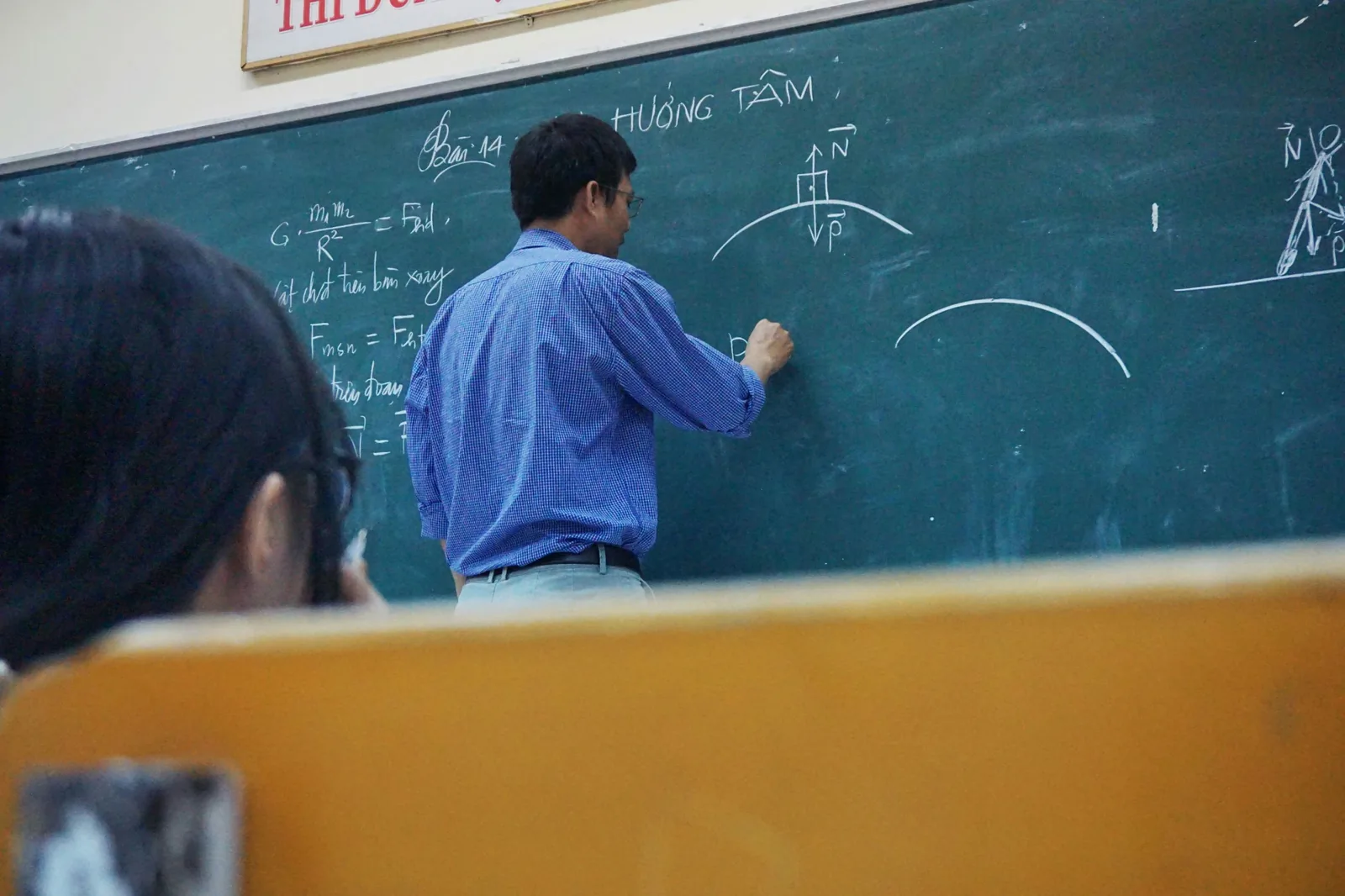
Many students work hard but lose marks because the method is unclear. In Physics, we often see:
Good tutoring does not just explain content. It changes how the student approaches tasks when the tutor is not there.
Lessons are adapted to the student’s school sequence, assessment calendar and current level.
In physics, formulas are not decorations. Before substituting numbers, write what each symbol means and whether the situation fits the model. This is especially important in projectile, circular motion and field questions.
Students practise this idea first with a small example, then with a question closer to HSC difficulty. The aim is to make the method repeatable.
Every session has a clear beginning, middle and end so the student knows what has improved.
Review homework, recent school work and any assessment deadlines.
Model the concept or exam method with a worked example.
The student attempts a targeted question while the tutor checks thinking.
Finish with corrections, an error log entry and homework that is realistic.
Use these guides to keep improving between lessons.
Write stronger validity, reliability, accuracy and method responses.
Open resource →Plan, research and present a depth study with a defensible method.
Open resource →Interpret gradient, area, uncertainty and units in Physics graphs.
Open resource →A step-by-step system for moles, concentration, titration and stoichiometry.
Open resource →Map functional groups, reactions and reagents without drowning in notes.
Open resource →Use cause-and-effect chains to turn content into high-mark explanations.
Open resource →Yes. Strong students often need harder practice, sharper feedback and help turning knowledge into full-mark responses under time pressure.
Yes, but the first step is prioritisation. We identify the highest-value gaps and rebuild the core methods before adding more workload.
Yes. Lessons should support school assessment tasks and trial preparation while also building the wider skills needed for the final exam.
Short, targeted homework is usually best. The goal is deliberate practice, not overwhelming the student with extra work.
Send through the student’s year, recent marks and upcoming assessment. We will suggest a practical starting point.